The Strategic Role of HR in Cybersecurity: Driving Secure Onboarding and Security Culture
Discover the strategic HR role in cybersecurity. Learn how secure onboarding and cross-department alignment build a resilient security culture under NIS2.
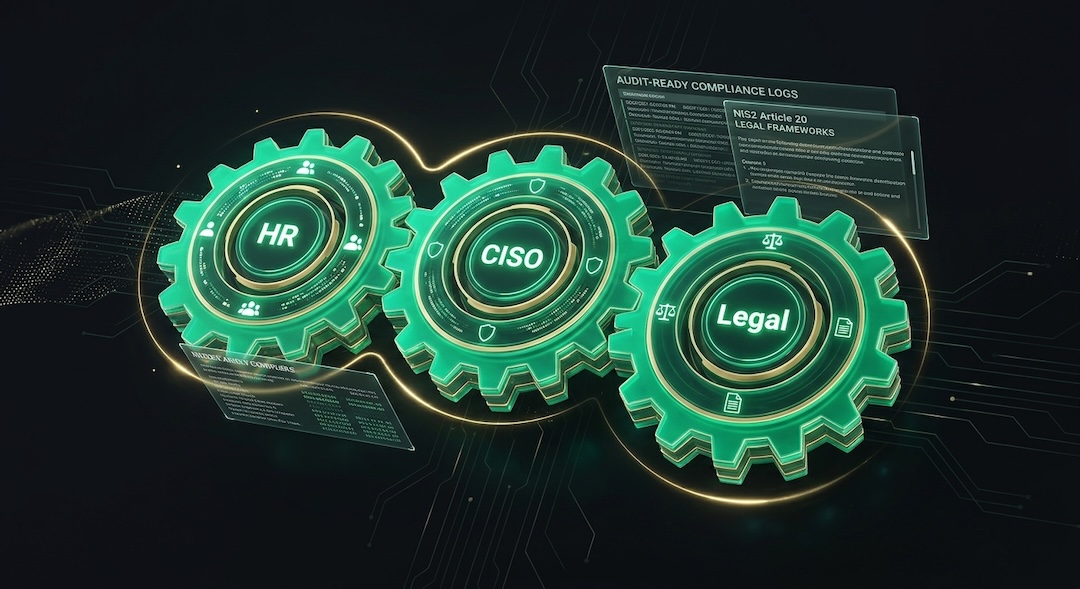
Human risk is business risk. Effectively mitigating digital threats requires moving beyond passive annual awareness programs toward continuous Human Risk Management (HRM) that embeds security directly into HR workflows. Aligning the Chief Human Resources Officer (CHRO) and Chief Information Security Officer (CISO) is now a fundamental requirement for corporate governance and operational resilience under European regulatory frameworks like NIS2.
Empirical data highlights the financial urgency of this cross-functional alliance. The IBM Cost of a Data Breach Report reveals that multi-million-dollar security incidents stem overwhelmingly from human action, credential theft, or social engineering tactics like phishing and vishing.
Technical safeguards alone cannot close this gap. The strategic HR role in cybersecurity bridges technology and workforce culture by integrating secure onboarding, clear role expectations, and psychological well-being into Human Risk Management (HRM). How does NIS2 impact employee management? It mandates verifiable security awareness logs, clear access controls, and direct executive accountability for building security culture across all organizational levels. Uniting CISO technical oversight with HR talent processes is essential for building a proactive human risk ownership culture, transforming individual collaborators into resilient defenders.
Secure Onboarding: Establishing Security Culture from Day One
Secure onboarding establishes a resilient security culture from day one by combining role-based identity management with adaptive behavioral evaluation. By embedding cybersecurity directly into initial talent workflows, organizations set clear psychological expectations of accountability before a collaborator touches corporate data, drastically reducing digital identity risk and supporting overall regulatory compliance.
Transforming Identity Provisioning and Access Control into Cultural Touchpoints
Traditional onboarding often treats access granting as a routine administrative task. Aligning HR identity provisioning with CISO access governance transforms identity setup into the first touchpoint of security culture. Joint HR-IT management enforces the principle of least privilege during initial setup, ensuring team members receive only the exact permissions needed for their role without creating operational friction.
Establishing clear account boundaries from day one sets a firm psychological standard for digital accountability. Organizations aligning with guidelines like the NIST Special Publication SP 800-181 Rev. 1 (NICE Workforce Framework) build structured onboarding protocols that clarify role-based risk expectations immediately.
Replacing Passive Classrooms with Adaptive Attack Simulations
Static orientation decks and passive annual lectures fail to change collaborator behavior or build long-term alertness when building security culture. What tools do I need to assess digital human risk during onboarding? Modern Human Risk Management leverages continuous, data-driven tools that evaluate real-world behaviors rather than attendance.
Implementing a structured secure onboarding 3-step workflow strengthens the HR role in cybersecurity and transforms new hires into proactive defenders:
- Establish a non-punitive baseline: Deploy initial social attack simulations (phishing, vishing, or smishing) during the first weeks to measure initial alertness without shaming collaborators.
- Deploy role-tailored micro-awareness: Replace generic presentations with automated, job-specific micro-sessions that deliver 5-minute practical scenarios.
- Automate risk-based progression: Utilize adaptive micro-awareness workflows to automatically adjust frequency and difficulty based on individual risk scores and role sensitivity.
This proactive approach elevates the strategic HR role in cybersecurity, ensuring new team members actively strengthen organizational resilience from their very first day.
Cross-Department Collaboration: Bridging HR, CISO, and Legal for NIS2 Compliance
Cross-department collaboration between HR, the CISO, and Legal expands the HR role in cybersecurity, driving NIS2 compliance because human risk is business risk. Uniting technical controls with workforce management transforms regulatory requirements into an integrated corporate governance model that protects organizations from operational disruption and severe legal sanctions.
Translating Article 20 of NIS2 into Joint Executive Mandates
Under the Directive (EU) 2022/2555 (NIS2 Directive), Article 20 shifts governance accountability directly to executive leadership. Article 20 enforces mandatory cybersecurity training for executive management bodies, backing this mandate with potential personal liability and temporary discharge from management functions for non-compliance.
How does NIS2 impact employee management? It requires HR and Legal to maintain verifiable, audit-ready compliance logs documenting executive and workforce cyber-hygiene. Together, the strategic HR role in cybersecurity and CISO technical oversight turn regulatory pressure into demonstrable due diligence, protecting leadership from personal exposure. For a deeper breakdown of management duties, review executive personal responsibility under NIS2.
Aligning Psychological Well-Being with Digital Risk Mitigation
Continuous stress, digital fatigue, and workplace burnout directly degrade cognitive alertness, increasing vulnerability to social engineering tactics like phishing or vishing. HR’s internal risk evaluations provide the critical psychological context that CISOs need to adjust security policies before fatigue triggers costly security incidents.
To achieve effective cross-department alignment while building security culture, organizations must structure clear, complementary responsibilities across business units:
- CISO Responsibilities: Defines technical safeguards, deploys social attack simulations, and monitors system-level threat indicators.
- HR Responsibilities: Governs talent workflows, evaluates psychological stressors, and leads measuring burnout metrics that elevate operational risk.
- Legal & Compliance Responsibilities: Validates regulatory reporting, ensures data privacy compliance, and verifies audit evidence for regulatory authorities.
Building Security Culture: From Compliance Metrics to Behavioral Resilience
Building security culture across departments requires shifting from static compliance checklists to continuous, data-driven Human Risk Management (HRM). By measuring cognitive alertness, credential exposure, and psychological context rather than passive course completion, organizations cultivate measurable behavioral resilience. This proactive approach transforms collaborators into an active defense layer while generating verifiable audit evidence for European governance frameworks.
Replacing Passive Checklists with Continuous Psychometric Benchmarking
Measuring organizational readiness solely through completion logs creates a false sense of security. Industry research, such as Gartner Insights on Security Behavior & Culture Programs, confirms that security leaders must transition from compliance-focused activities toward continuous behavioral management.
What tools do I need to assess digital human risk across my workforce? Implementing continuous psychometric benchmarking replaces superficial metrics with a dynamic human risk score (0–6 scale).
To establish an effective behavioral benchmarking model, organizations follow a 3-step maturity roadmap:
- Track real behavioral indicators: Evaluate how collaborators react to automated social attack simulations rather than tracking attendance lists.
- Gain real-time departmental visibility: Identify high-risk business units and cognitive stress hotspots to prioritize security resources effectively.
- Deploy automated micro-interventions: Deliver 5-minute personalized awareness sessions to specific risk groups without causing operational friction, evaluating real behavioral metrics versus vanity metrics to demonstrate concrete risk reduction to the board.
Empowering Internal Security Champions Across Departments
Building security culture thrives on positive psychological reinforcement rather than punitive policies. HR directors and CISOs can utilize platform risk scoring to identify highly vigilant collaborators and formalize them as peer security champions across business units.
Recognizing and rewarding proactive threat reporting reinforces building security culture and establishes a psychologically safe environment for all collaborators. When collaborators feel supported rather than blamed for reporting suspicious emails or potential mistakes, threat visibility increases dramatically. This cross-departmental alignment ensures that building security culture becomes a shared corporate responsibility that directly shields business continuity.
Conclusion: Transforming Human Risk into Organizational Resilience
Human risk is business risk, making the strategic alliance between the CISO and HR leadership a core requirement for regulatory compliance and operational resilience. Strengthening the HR role in cybersecurity through secure onboarding bridges workforce management with threat prevention, turning regulatory obligations into corporate governance strengths. By embedding Human Risk Management into talent workflows from day one, organizations eliminate passive tick-box exercises and protect executive leadership from personal liability under NIS2.
To maximize the HR role in cybersecurity, begin building security culture, and actively mitigate digital exposure across your workforce, take these immediate strategic steps:
- Unite HR workflows with access governance: Establish role-based permission boundaries and secure onboarding protocols to minimize digital identity risk before access is granted.
- Automate continuous micro-awareness: Replace static annual presentations with short, adaptive scenarios tailored to individual job roles and behavioral risk scores.
- Quantify organizational resilience: Leverage the Kymatio HRM platform to obtain real-time visibility into departmental risk scores, credential exposure, and psychological threat indicators.
Ready to transform your workforce from a primary attack vector into an active line of defense? Evaluate your company's risk exposure and schedule an executive demo today.
Frequently Asked Questions


The HR role in cybersecurity involves driving secure onboarding, embedding security culture into talent management, and managing digital human risk. HR aligns workforce policies with CISO governance, demonstrating that human risk is business risk.
Secure onboarding builds security culture from day one by combining role-based access control with adaptive social attack simulations. This generates verifiable audit evidence required under regulations like NIS2 while establishing clear accountabilities for new collaborators.
CISOs manage technical controls, while HR governs workforce workflows, psychological well-being, and onboarding. Cross-department alignment ensures security policies are smoothly integrated into daily operations without triggering digital fatigue or operational friction.
Traditional awareness relies on passive tick-box exercises that yield superficial completion checks. Human Risk Management (HRM) continuously evaluates collaborator behavior, psychological stressors, and credential exposure, delivering personalized micro-awareness sessions to mitigate actual risk.
Chronic stress and digital fatigue lower cognitive alertness, making collaborators significantly more vulnerable to social engineering tactics like phishing or vishing. HR must monitor collaborators well-being as a direct indicator of digital risk.
NIS2 Article 20 mandates regular cybersecurity governance training for management bodies and holds executives personally liable for non-compliance. HR must maintain verifiable compliance logs of executive training and workforce cyber-hygiene as due diligence evidence.




Join the Kymatio® newsletter and get the latest insights, research, and practical tips on cybersecurity awareness prevention straight to your inbox.