Vishing vs Phishing vs Smishing: Understanding Modern Voice Fraud
Understand the operational differences in vishing vs phishing vs smishing to mitigate human risk and secure corporate compliance under NIS2.
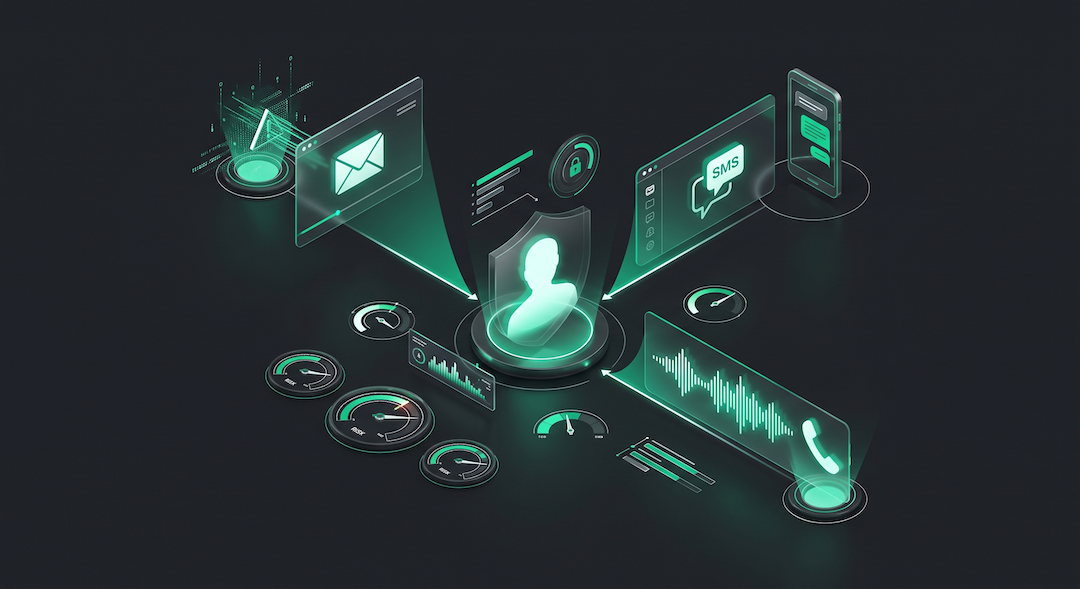
Human risk is business risk. Corporate governance frameworks across Spain and Europe dictate that senior executives can no longer relegate cybersecurity to a decentralized technical silo. Legacy security approaches that rely on passive, checklist-based compliance exercises have systematically failed to curb security incidents. Modern security leadership must replace passive training frameworks with proactive risk indicators that quantify workforce vulnerabilities in real time.
For regulated companies, this shift is no longer optional. While financial institutions and critical ICT providers are bound by the strict operational perimeters of the Digital Operational Resilience Act (DORA), the broader pool of medium and large enterprises across Europe must align immediately with the stringent risk management mandates of the NIS2 Directive.
Translate this regulatory environment directly into business consequences: non-compliance under Article 20 of NIS2 strips away the corporate veil, introducing personal administrative liability for the C-suite, potential temporary suspension of executive management functions, and devastating financial penalties of up to 10 million euros or 2% of global annual turnover.
When a collaborator is manipulated into exposing corporate assets, the resulting operational interruption directly degrades company valuation and corporate performance. Managing this vulnerability requires deep visibility into behavioral safety metrics to calculate an empirical baseline of workforce readiness, effectively balancing the financial impact of human risk against the organization's bottom line.
Breaking Down Social Engineering Types: Vishing vs. Phishing vs. Smishing
To protect the corporate infrastructure against advanced threat actors, executives must map the execution pathways of the most critical social engineering types exploiting the workforce. While all these vectors exploit cognitive blind spots, their execution pathways and technical entry points differ significantly.
Phishing: The Digital Gateway
Phishing remains the baseline vector for corporate initial access exploitation. Attackers leverage malicious email communications designed to impersonate trusted corporate entities, suppliers, or internal executives. The primary objective is to compromise corporate credentials, execute malicious payloads, or redirect collaborators to fraudulent landing pages. Despite advanced secure email gateways, highly customized spear-phishing attacks bypass traditional technical filters by omitting obvious malicious links and focusing entirely on text-based semantic manipulation to harvest authentication tokens.
Smishing: Exploiting Text-Based Trust
Smishing shifts the attack vector to mobile short message services (SMS) and instant messaging applications such as WhatsApp or Telegram. This channel exploits a higher baseline of human trust; collaborators who carefully scrutinize corporate emails often interact with mobile text messages impulsively. Attackers utilize shortened malicious URLs or fake security alerts from banking entities or delivery services to bypass mobile endpoint monitoring, directly stealing identity credentials or installing mobile malware capable of intercepting multi-factor authentication (MFA) codes.
Vishing: The Tactical Rise of Voice Fraud
Vishing, or voice phishing, utilizes phone calls or synthetic audio vectors to deceive corporate personnel. Unlike email or text, which allow a collaborator time to evaluate red flags, vishing introduces real-time voice interaction. Attackers routinely masquerade as IT helpdesk technicians, external legal auditors, or high-level executives to extract sensitive data or force fraudulent financial transactions.
What is the difference between vishing, phishing, and smishing?
Phishing leverages malicious emails to steal corporate credentials, smishing exploits mobile text messaging channels to deliver malicious links, and vishing utilizes interactive phone calls or synthetic voice audio to deceive targets into exposing system access or executing fraudulent transactions.
As social engineering tactics mature, these channels are no longer isolated. Cybercriminals routinely deploy multi-vector campaigns, blending vectors to compromise workforce defenses via hyper-targeted text and voice attacks. To see how these tactical execution pathways are cataloged at an enterprise level, security teams should reference the official MITRE ATT&CK framework reference for Phishing (T1566) to map specific initial access methodologies against their technical controls.
Sound Psychology: Why Human Firewalls Fail Against Voice Fraud
The corporate vulnerability to vishing cannot be solved by technical firewalls alone because voice fraud targets the neurobiology of human communication. Sound psychology dictates that the human auditory channel possesses unique evolutionary shortcuts that bypass our standard analytical processing centers.
The Neurobiology of Urgency and Authority
When a collaborator hears a human voice, the brain processes the auditory stimuli faster than written text, triggering immediate emotional reflexes. Attackers exploit this acoustic baseline by projecting high-level executive authority or simulating an acute operational crisis.
When a voice claiming to be the CEO or an urgent regulatory auditor demands immediate assistance, it triggers a neurobiological compliance mechanism rooted in the fear of negative consequences or the altruistic desire to resolve a corporate emergency. The collaborator's cognitive processing narrows, causing them to execute instructions—such as bypassing verification protocols or revealing internal system parameters—that they would have flagged as suspicious in an email.
Cognitive Overload and the Fatigue Trap
Modern enterprise environments are hotbeds for cognitive gaps. High-pressure atmospheres, constant slack notifications, and digital exhaustion create a state of permanent cognitive overload. When an interactive voice attack targets an exhausted collaborator, it exploits this fatigue trap.
This operational vulnerability is documented in the phishing compromises of MGM Resorts and Caesars, where attackers bypassed multi-million dollar technical perimeters by simply calling internal IT helpdesks. Using advanced social engineering techniques, the attackers manipulated helpdesk personnel into resetting credentials and disabling MFA tokens for high-privileged accounts in under ten minutes.
Empirical data from European cybersecurity authorities documents a 1,300% surge in synthetic voice and generative AI-driven manipulation vectors. Executives can track these macro behavioral trends and security indices across Europe by auditing the ENISA Threat Landscape Publications to recalibrate their organizational defense architectures against modern voice fraud. To counter these psychological exploits, security leaders must deploy behavioral guidelines, transforming theoretical understanding into an operational defense using an enterprise-grade voice fraud protection playbook.
The Anatomy of Modern Multi-Vector Attacks
Modern corporate fraud rarely relies on a single, isolated phone call. Instead, advanced threat actors orchestrate structured, cross-channel campaigns that execute structured, multi-layered attacks across several communication channels simultaneously.
Cross-Channel Exploitation: OSINT to Call Execution
An advanced multi-vector attack follows a precise tactical workflow designed to exploit corporate assets while undermining data confidentiality, integrity, and availability (CID):
- Open-Source Intelligence (OSINT): Attackers scrape professional networks like LinkedIn to map the target company's hierarchy, identifying specific corporate roles in financial or IT administration, along with their active supplier relationships.
- The Text-Based Prelude: The target collaborator receives a smishing message or a WhatsApp text alert pretending to be a known vendor or an internal HR notification, pre-conditioning the target to expect an urgent corporate update.
- The Voice Fraud Execution: Minutes later, a vishing call is executed. The attacker references the precise information from the text message, leveraging the established familiarity to completely neutralize the collaborator’s suspicion.
AI-Powered Cloning and Deepfake Vulnerabilities
The weaponization of generative artificial intelligence has fundamentally broken traditional identity verification. Threat actors no longer need to manually mimic an executive's tone or speech patterns. Utilizing less than three seconds of public audio sample—extracted from a corporate webinar, a YouTube interview, or a media appearance—generative AI models can clone an executive's voice with perfect inflection, cadence, and language capabilities.
When an attacker deploys these realistic deepfake voice vectors in real-time corporate communications, traditional phone verification becomes entirely obsolete. To secure these exposed identity perimeters, corporate security architectures must enforce strict technical standards.
Cybersecurity leaders should align their internal verification controls with the National Institute of Standards and Technology (NIST) Digital Identity Guidelines (SP 800-63B) available to establish robust cryptographic and out-of-band validation procedures. Furthermore, deploying these simulations must occur within strict compliance boundaries, which requires checking the legal framework for attack simulations under GDPR and European data protection laws.
Next-Generation Human Risk Management vs. Traditional SAT
As vishing and multi-vector engineering become standard threat methodologies, legacy Security Awareness Training (SAT) fails to prevent initial access. Regulated corporations must transition from passive compliance programs to data-driven Human Risk Management (HRM).
Why Static Training Modules Induce Training Fatigue
Legacy security awareness training relies on generic annual sessions that treat the workforce as a homogeneous group, ignoring individual vulnerability indicators. These compliance-centric elearnings and static courses fail because they induce severe training fatigue, consume valuable operational hours, and fail to alter long-term collaborator behavior.
More critically, static training provides absolutely zero actionable metrics for security operations. A box checked on a static slide provides zero visibility into how a collaborator will react under the high-pressure conditions of an AI-cloned corporate vishing call.
Adaptive Social Attack Simulations: The Kymatio Approach
Next-Generation Human Risk Management shifts the operational focus from passive compliance to continuous, automated behavioral quantification. The Kymatio platform abandons the obsolete concept of generic courses, focusing instead on continuous micro-awareness sessions and adaptive Social Attack Simulations.
By leveraging advanced psychometric profiling and continuous risk monitoring, Kymatio calculates an objective Human Risk Score tailored to each collaborator and department based on concrete indicators:
- Assessment & Awareness (A&A): Interactive, monthly micro-awareness sessions guided by automated chatbots that evaluate behavioral predispositions and knowledge gaps without disrupting the workday.
- Account Breach Scanner (ABS): Continuous monitorization of exposed corporate credentials across the Deep and Dark Web, tracking active exposures before they can be weaponized in a targeted voice attack.
- Multi-Vector Simulations: Automated, realistic simulation campaigns across email, SMS, and voice vectors to empirically measure and optimize the workforce's actual resistance rate.
This comprehensive approach transforms human risk from an invisible vulnerability into a manageable, quantified operational indicator. This strategy serves as an educational campaign designed to prepare internal workforces to confidently activate their human firewalls.
To transition your security posture from reactive compliance to proactive behavioral defense, discover Kymatio's core human risk management platform for holistic risk quantification, and evaluate our adaptive social attack simulations module to rigorously test your workforce against the modern threat landscape.
Frequently Asked Questions


Vishing bypasses secure email gateways through direct vocal interaction. It exploits neurobiological triggers to pressure collaborators, creating immediate compliance gaps that activate personal administrative liability for the C-suite under NIS2 Article 20.
Auditory stimuli trigger evolutionary shortcuts like authority obedience and false urgency, bypassing rational analysis. Mitigating this risk requires behavioral data quantification via continuous Human Risk Management (HRM) rather than relying on legacy technical perimeters.
No. Traditional static methods rely on rigid annual sessions that induce fatigue and fail to alter behavior. Proactive defense requires data-driven Social Attack Simulations that continuously calculate a collaborator’s actual resistance and readiness across text and voice vectors.
Successful mobile attacks compromise identity credentials, breaking data confidentiality, integrity, and availability (CID). For regulated firms, this translates to severe operational interruption, reputational erosion, and direct non-compliance penalties under European frameworks.
Generative AI enables rapid, ultra-realistic voice cloning from minimal public audio. Attackers simulate executive authority to force fraudulent financial transactions, rendering legacy, phone-based identity verification protocols completely obsolete.
It transforms qualitative workforce behavior into an empirical operational indicator. This data allows CISOs to translate technical vulnerabilities into financial exposure, optimize security investments (ROSI), and provide auditable compliance evidence to regulators.



Join the Kymatio® newsletter and get the latest insights, research, and practical tips on cybersecurity awareness prevention straight to your inbox.